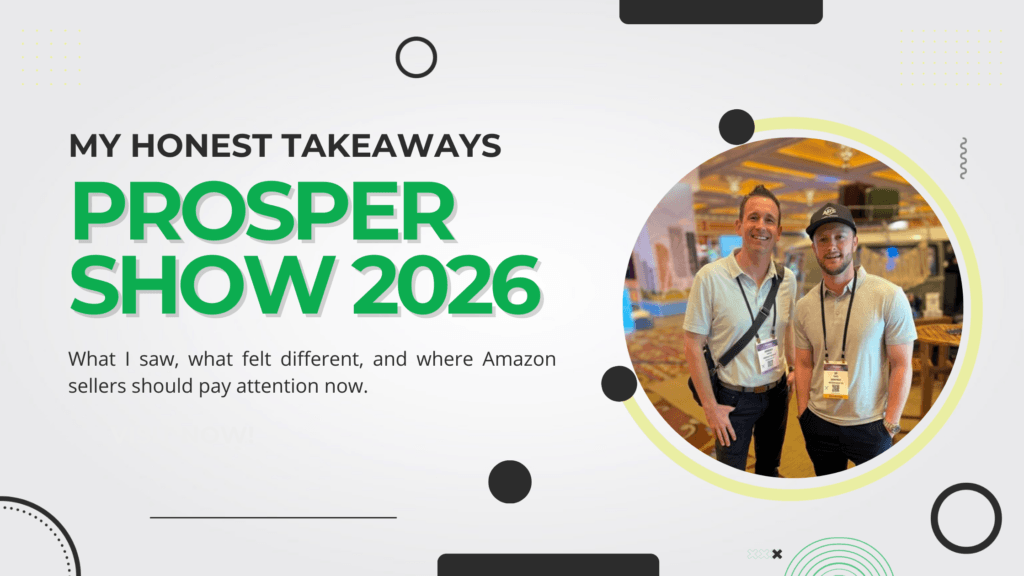
My Honest Takeaways from Prosper Show 2026
TL;DR
Prosper Show 2026 in a nutshell: AI hype outpaced substance, content and creators are the real growth channel, the software market is consolidating hard, and the sellers winning right now are the ones who mastered operations, not hacks.
Prosper Show turned 10 this year. I've been going since 2016, back when Joseph Hansen and James Thompson invited me to speak. They were early customers of mine at Forecastly and wanted someone who could get into the weeds on FBA inventory forecasting and replenishment.
Forecastly is long gone, but Amazon sellers still run out of stock, still over-order, and still leave money on the table because their replenishment process is broken. That's why I built Profit Hawk.
Five Prospers in and I still find myself scribbling notes on my phone at midnight in the hotel lobby. Prosper Show 2026 has changed a lot since that first year. So has the industry. Here's what I took away from this one.
Jump to the section you need:
AI is everywhere. Substance is not.
I use AI every single day. It's made me dramatically more productive. So when I say the AI hype on the Prosper Show 2026 exhibit floor was out of control, I'm not saying it as a skeptic. I'm saying it as someone who actually uses the stuff and can tell when it's real versus when it's a marketing stunt.
Here's my problem: too many companies have taken their existing Amazon data, wrapped a chatbot around it, and called it a breakthrough. But data without expertise is just noise. If you've been selling on Amazon for a while, you know that the hardest decisions in your business require context that no AI has yet.
When to push inventory forward. When to hold back on ad spend. When a supplier relationship needs a phone call instead of a spreadsheet. I don't trust an AI to make those calls, and I don't think you should either.
My litmus test at the show was simple: walk up to a booth, ask their AI a question, then ask a follow-up that required it to remember what it just said. Most couldn't do it. If you're shopping for tools right now, try that before you buy. The companies doing real work aren't afraid of a second question.
Where the conversation got exciting was outside the main event. There's a growing group of operators thinking about agentic workflows, AI that doesn't just answer questions but actually executes tasks on your behalf. It's early, but the people working on it are serious. That's the AI conversation worth paying attention to.
The show floor has changed
I've walked the Prosper exhibit hall enough times to have a baseline for what "normal" looks like. This year felt different. Not bad, just... mature.
The wild energy of the early years has settled into something more measured. People weren't chasing shiny objects. They were asking pointed questions about margins, operational efficiency, and where to place their bets for the next 18 months.
The attendee profile has shifted noticeably over my five years. Early Prosper was almost entirely Amazon sellers comparing notes. Now you've got sophisticated DTC operators in the mix who treat Amazon as one channel in a much bigger playbook. That's made the hallway conversations way more interesting, even if the exhibit hall itself has gotten a bit repetitive.
Two absences worth noting: Helium 10 and Jungle Scout didn't have booths this year. And I didn't spot a single brand aggregator. Both of those would have been unthinkable in 2022. The market is reshuffling fast.
Content and creators are the real growth lever
If AI was the loudest topic at Prosper, content was the most useful. I kept hearing the same thing in different sessions: the brands growing fastest right now treat creators and affiliate partnerships as a core channel, not something they dabble in when they have extra budget.
The TikTok-to-Amazon pipeline came up over and over. Creators drive discovery on social, that drives branded search on Amazon, and branded search converts at a ridiculous rate. It's the closest thing to a free lunch I heard about all week. If you're still treating influencer work as a nice-to-have, the market is moving past you.
Amazon's own team is clearly investing here too. Their Ads content creation tools have gotten meaningfully better, which is encouraging for sellers who can't afford to hire an agency for every creative asset.
The great consolidation
Zoom out and the theme was obvious: consolidation. The Amazon software market has hit the same wall that private label hit a few years back. Too many players, too little differentiation, everyone competing on price. And the recent wave of half-baked, vibe-coded tools hasn't helped. Most of them do a whole lot of nothing, and I wouldn't trust them with my email address, let alone my confidential business data. The next couple of years are going to be rough for a lot of these companies.
Sellers want to diversify off Amazon. Everyone says it. But where? Walmart came up constantly, but always with a "but." The opportunity is right there and they keep tripping over themselves. I want them to figure it out. I've wanted that for years now. SHEIN, Temu, Mercado Libre, eBay? They came up in passing. Nobody I talked to is building around any of them.
Slow growth is winning
Probably my favorite takeaway from the whole week. The brands that looked strongest at Prosper weren't the flashy ones. They were the ones that had quietly built real operational muscle. Reliable supply chains. Strong teams. Products people actually reorder. That boring stuff is carrying them now that the easy growth is gone.
I've spent the better part of a decade helping sellers get their inventory and forecasting right, so this hits home for me. The sellers who did the unsexy operational work during the boom? Still here. The ones who rode momentum and figured they'd sort it out later? A lot of them aren't.
One of the keynotes put it in a way that stuck with me: when everyone has access to the same ad tools and the same supplier directories, the edge comes from operational complexity. Knowing exactly when to reorder, how much safety stock to carry by SKU, how your inventory distribution affects your ranking, what your true landed cost is after all the fees. The sellers who actually master that stuff have the moat now. Not another product launch. Not another hack.
The real value of Prosper Show 2026: human connections
The sessions were fine. But the best stuff at Prosper, like at most larger conferences, has always happened between the sessions. Hallway conversations, impromptu dinners, the late-night casino floor hangout where somebody casually drops a strategy that rewires how you think about a problem. That's been true every year I've gone.
The highlight of this trip was an informal gathering about agentic AI that turned into a long dinner. No slides, no pitching. Just people who actually run businesses comparing notes on what's working. Give me one evening like that over a full day of panels.
If you're an Amazon seller thinking about going to your first conference, here's what I'd say: don't go for the sessions. Most of that content is online somewhere. Go because the right conversation with the right person can change the direction of your business. That's happened for me at every Prosper I've been to.
Ten years of this show. It's changed a lot, and so have I. See you at the next one. 🤙
Frequently asked questions about Prosper Show 2026
Is Prosper Show worth attending?
Yes, if you go for the right reasons. The sessions cover useful ground, but the real value is in hallway conversations, dinners, and the unscripted exchanges between sessions. I've gotten at least one business-changing insight from every Prosper I've attended. If you're an Amazon seller doing seven figures or more, the networking alone justifies the trip.
What were the biggest trends at Prosper Show 2026?
AI dominated the exhibit floor, but most implementations lacked substance. The more meaningful trends were the rise of content and creator partnerships as a core growth channel, ongoing consolidation in the Amazon software market, and a clear shift toward operational excellence over growth hacks. Sellers who have mastered fundamentals like reorder timing, safety stock, and landed cost analysis are outperforming those still chasing shortcuts.
Who attends Prosper Show?
The audience has evolved significantly. Early Prosper was almost entirely Amazon private label sellers. Now it includes sophisticated DTC operators who use Amazon as one channel in a multichannel strategy, software vendors, service providers, and content creators. Brand aggregators, once a major presence, were notably absent in 2026.

15+ years in the Amazon selling world, helping hundreds of brands figure out inventory without losing their minds. I built Forecastly, which became the go-to tool for Amazon inventory forecasting before Jungle Scout acquired it. After leading Product and Design at Jungle Scout for several years, I missed being close to the real problems sellers face. In 2025, I kept hearing the same thing: inventory tools were too complex, too expensive, or just didn't fit. So I built Profit Hawk.