TL;DR Amazon automation now spans three layers: rules-based software (repricers, replenishment tools), Amazon’s own Seller Assistant agents, and always-on AI agents like ChatGPT Dots. Use agents for research and monitoring, route account actions through Amazon’s official tools, and skip any “automated store” that wants your money and your login. Two years ago, Amazon automation meant […]
Freight Consolidation for Amazon FBA: The 2026 Guide to Lower Landed Cost
TL;DR Freight consolidation means combining separate shipments into one larger, palletized, container-scale move to Amazon. For most FBA sellers past 12 to 15 CBM per order, freight consolidation cuts per-unit freight by 30 to 50 percent and lowers total landed cost enough to add real margin points. Most sellers I talk to obsess over their […]
Incoterms for Amazon Sellers: A Practical Guide to FOB, DDP, and Risk Transfer
TL;DR Incoterms are the international rules that decide who pays and who carries the risk at each step of a shipment. For most Amazon FBA sellers, FOB gives the best balance of cost and control, while DDP trades convenience for real customs liability. Pick your Incoterm before you negotiate price, not after. If you have […]
Buffer Inventory Strategies for Surviving Supplier Delays on Amazon FBA
TL;DR Buffer inventory is the extra stock you hold to keep selling when a supplier ships late. For most Amazon FBA sellers, sizing it to your lead time variability, then splitting it between FBA and a 3PL or AWD, protects your Buy Box and IPI without drowning your cash in units you cannot sell fast […]
8 FBA Inbound Levers High-Volume Sellers Use to Cut Placement Fees and Get Prime-Eligible Faster
TL;DR Most seven-figure Amazon sellers lose margin and speed on the inbound half of the supply chain, between the supplier and the moment a unit becomes Prime-eligible. Eight levers control that stretch: inventory positioning, time to Prime, replenishment cycle length, placement fees, dock appointments, surge capacity, prep accuracy, and managed services. Once you’re past seven […]
Amazon Business Models Explained: How Sellers Actually Make Money
TL;DR There are six main Amazon business models: private label, wholesale, retail arbitrage, online arbitrage, dropshipping, and handmade, plus the 1P vendor route. Private label has the highest margin ceiling (20 to 35% net) but the slowest ramp. Wholesale is the most predictable. The right model is the one whose cost structure and cash flow […]
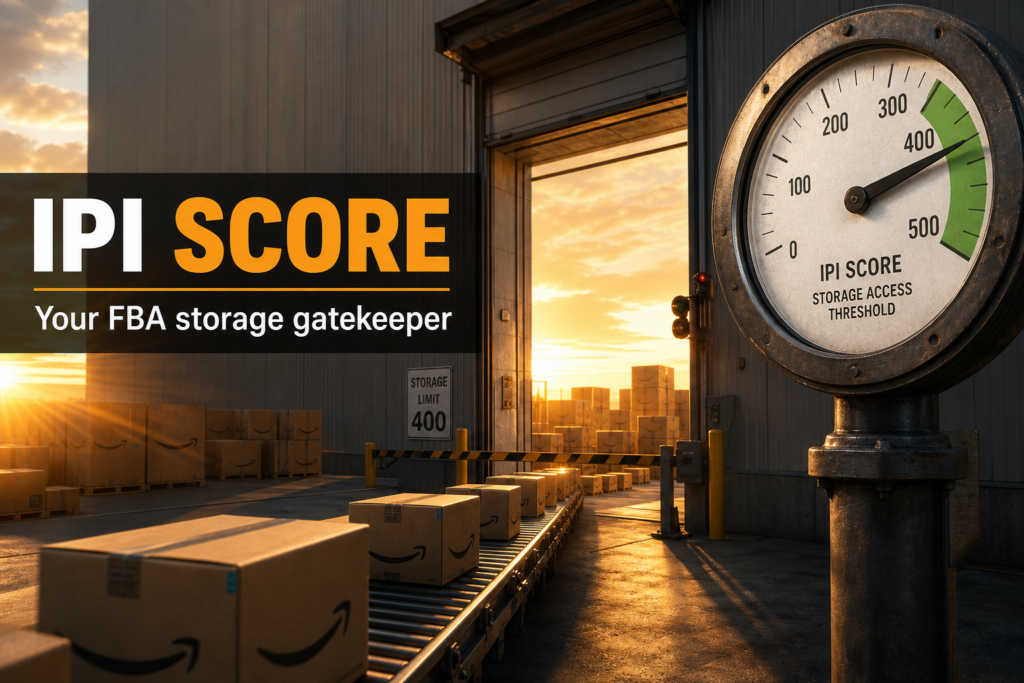
Inventory Performance Index Explained: How Amazon’s IPI Score Controls Your FBA Storage
TL;DR Your Inventory Performance Index is Amazon’s 0 to 1,000 score for how efficiently you run FBA inventory. It blends excess inventory, sell-through rate, stranded inventory, and in-stock rate. Stay above 400 and you keep unrestricted storage. Drop below and Amazon caps your capacity, usually right before peak season. You find out your storage got […]
Amazon FBA Excess Inventory: An Honest Guide to Causes, Cures, and Prevention
TL;DR Amazon FBA excess inventory is stock that stopped earning its keep. In most cases, that happens once a SKU passes 180 days without meaningful sales. You have four exit paths for Amazon FBA overstock: discount, liquidate, remove, or dispose. Prevention beats all four. Every Amazon FBA seller eventually finds some FBA excess inventory sitting […]
Amazon Seller Q4 Survival Guide: Don’t Let The Holiday Season Eat You Alive
Jump to the section you need: Amazon Seller Q4 Survival Guide: Don’t Let The Holiday Season Eat You Alive TL;DR Ship your FBA inventory by early October (October 19 hard deadline), lock down a prep center by August, and order Q1 stock before Chinese New Year shuts down your suppliers. This guide covers every Amazon […]