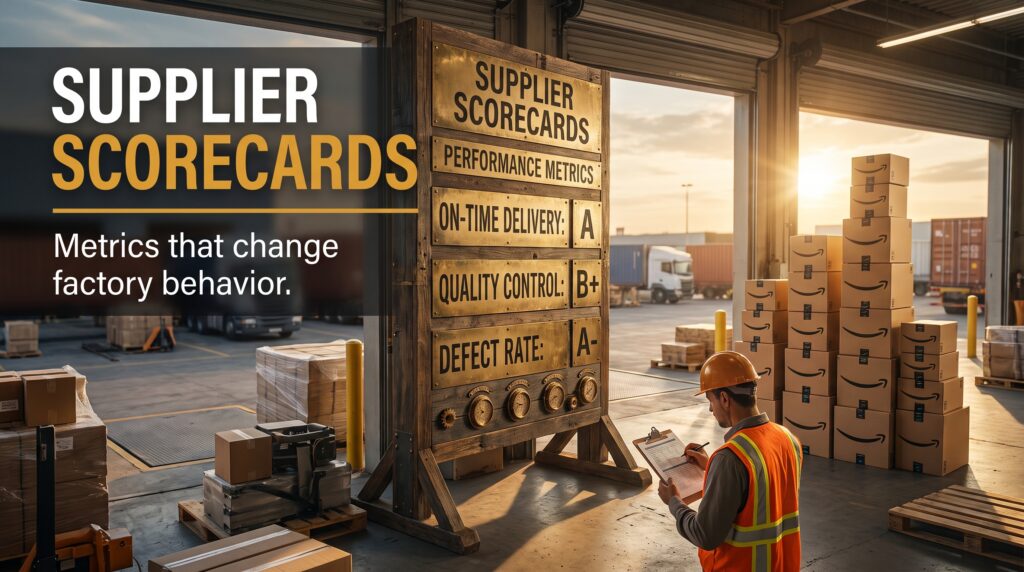
TL;DR A supplier scorecard is a shared record of how your supplier performs on a few metrics that matter: on-time delivery, order accuracy, defect rate, and responsiveness. It only changes behavior when you keep it to five metrics, review it on a set schedule, and tie the grade to future order volume. Most Amazon sellers […]
How to Build a Dual Sourcing Strategy for Amazon FBA
TL;DR A dual sourcing strategy means buying the same product from two qualified suppliers instead of one. For Amazon FBA sellers, it prevents the stockouts that wreck your rank when a single factory misses a run. Split your volume, qualify a real backup, and write the terms down before you need them. Picture this. Your […]
Buffer Inventory Strategies for Surviving Supplier Delays on Amazon FBA
TL;DR Buffer inventory is the extra stock you hold to keep selling when a supplier ships late. For most Amazon FBA sellers, sizing it to your lead time variability, then splitting it between FBA and a 3PL or AWD, protects your Buy Box and IPI without drowning your cash in units you cannot sell fast […]
Lead Time Variability Is Quietly Killing Your FBA Service Levels
TL;DR Lead time variability is the swing in how long your supplier actually takes to deliver, not the average. It matters more than the average because your safety stock scales directly with that swing. For most Amazon FBA sellers, taming lead time variability protects service levels better than shaving a few days off the average. […]
Safety Stock Explained: How to Set It Correctly for Your Amazon FBA Business
You’ve done everything right. Your supplier shipped on time, your freight forwarder hit the delivery window, and Amazon checked in your inventory without delays. Then out of nowhere, demand on your best-selling ASIN doubles for two weeks. Maybe a competitor went out of stock. Maybe an influencer mentioned your product. Doesn’t matter. You’re out of […]